 Skip to content
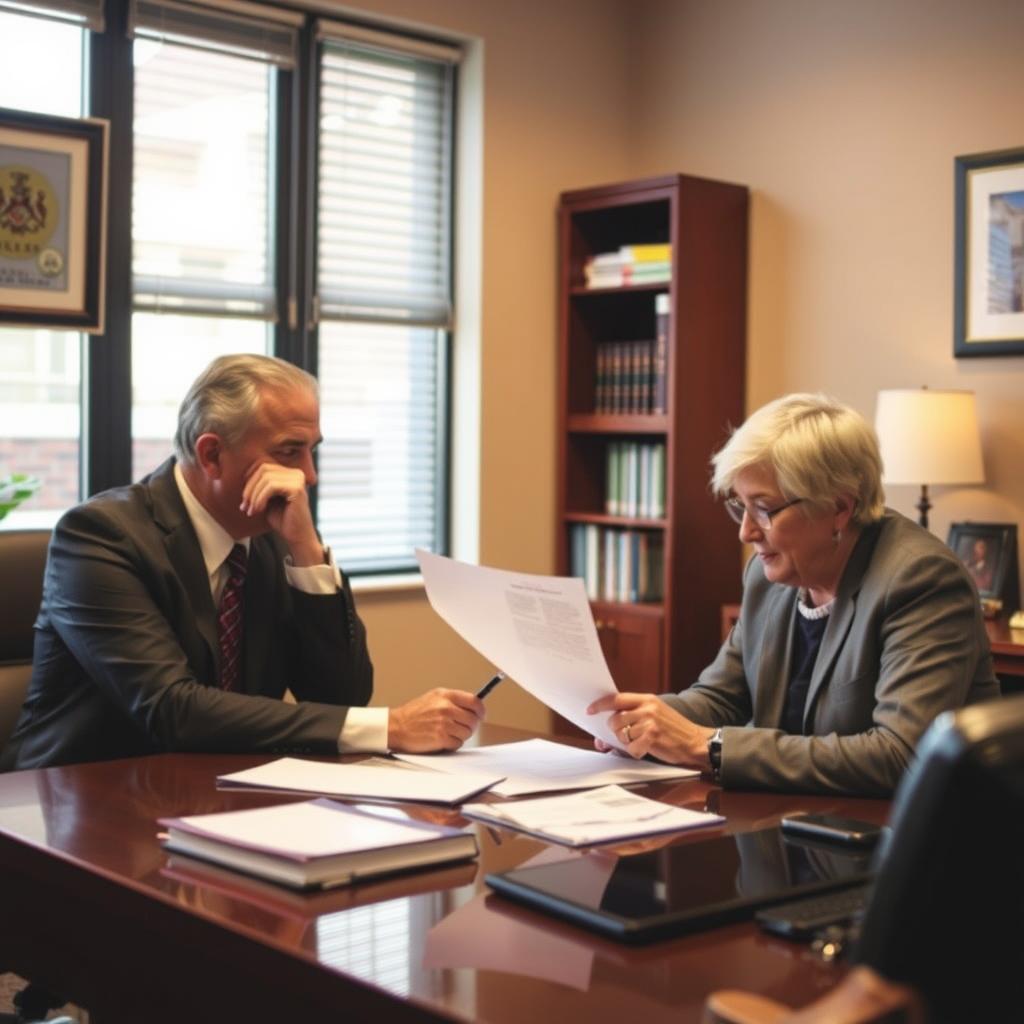
How long does a criminal case take in Baltimore County
The timeline for a criminal case in Baltimore County, Maryland depends on the severity of the charge, whether the case is heard in the District Court or the Circuit Court, and the procedural steps that unfold after an arrest. A misdemeanor in the District Court of Maryland for Baltimore County—located at 120 East Chesapeake Avenue in Towson—may be scheduled for trial within a period measured in weeks to a few months, while felony cases that go to the Baltimore County Circuit Court often take longer, sometimes extending beyond a year. Key factors include the need for bail review, pretrial motions, plea negotiations, and the court’s own docket. Maryland’s speedy‑trial rule for felony jury trials, the Hicks date, requires that a trial begin within 180 days of the defendant’s first appearance, but many cases resolve through negotiated dispositions well before that point. To discuss the likely range for your specific charge, reach Law Offices Of SRIS, P.C. at (888) 437‑7747. Law Offices Of SRIS, P.C. – Advocacy Without Borders.
Understanding Criminal Case Timelines in Baltimore County
The progression of a criminal matter in Baltimore County follows a sequence set by Maryland law and local practice. After an arrest, the defendant goes before a District Court commissioner for an initial appearance, where bail is set. If the defendant is detained, a bail review hearing is held in the District Court, typically within 24 hours. For misdemeanors, the case stays in the District Court, and the period from arraignment to trial may span from roughly 30 to 90 days, though scheduling can shift. Felony charges are more involved: after a preliminary hearing in the District Court—generally within 30 days if the defendant is not indicted—the case moves to the Circuit Court, where the timeline from arraignment to trial frequently ranges from several months to over a year.
Several events can extend or shorten the timeline. A Probation Before Judgment (PBJ) disposition—where the judge places the defendant on probation instead of entering a conviction—often resolves a case sooner, while a contested trial with multiple motions and witnesses will take longer. The State’s Attorney for Baltimore County may also decide to enter a nolle prosequi (dismiss the charges) or place the matter on the stet docket, effectively pausing the case. Expungement of eligible records, available later for acquittals, dismissals, stet, and PBJ, adds its own waiting period. Because the pace of each case is unique, working with an attorney who understands Baltimore County’s court procedures helps navigate the timeline and identify opportunities for a swifter resolution.
Frequently Asked Questions
What is Probation Before Judgment (PBJ) in Baltimore County, Maryland?
PBJ is a Maryland disposition where the judge places you on probation instead of entering a guilty verdict, avoiding a formal conviction on your record. It is available for many misdemeanors and some felonies at the District Court of Maryland for Baltimore County—Towson (120 East Chesapeake Avenue). After successfully completing probation, you may petition for expungement after a three‑year waiting period. SRIS actively practices in Baltimore County; firm‑wide, Mr. Sris and his Of Counsel have documented 4,739+ case results. Results may vary.
Can I get my criminal record expunged in Baltimore County, Maryland?
Maryland law allows expungement for acquittals, dismissals, nolle prosequi, stet dockets, PBJ (after three years), and many non‑violent convictions under the Justice Reinvestment Act. Cases in Baltimore County are expunged through the court where the case was heard, typically the District Court of Maryland for Baltimore County—Towson. The process requires a petition and a waiting period. SRIS actively practices here; firm‑wide, Mr. Sris and his Of Counsel have documented 4,739+ case results. Results may vary.
What happens after a criminal arrest in Baltimore County, Maryland?
After an arrest in Baltimore County, you appear before a District Court commissioner who sets bail, followed by a bail review hearing in the District Court if you are detained, then arraignment and trial. Misdemeanors are tried at the District Court of Maryland for Baltimore County—Towson (120 East Chesapeake Avenue). Felonies proceed to the Baltimore County Circuit Court. Maryland permits pretrial release on personal recognizance, bail, or conditions. The court may impose costs, and public defender eligibility is based on income. To discuss your case, contact Law Offices Of SRIS, P.C. at (888) 437‑7747.
Do I need a lawyer for a misdemeanor in Baltimore County?
You are not legally required to have a lawyer for a misdemeanor, but having an experienced attorney is often critical because many Maryland misdemeanors carry significant penalties. For example, second‑degree assault can bring up to 10 years’ imprisonment, and theft of property may mean up to 6 months. An attorney who practices in the District Court of Maryland for Baltimore County can negotiate a PBJ (avoiding a conviction) or seek dismissal. To schedule a consultation, call (888) 437‑7747.
What is the Hicks date and how does it affect my case?
The “Hicks date” is the deadline under Maryland law by which a felony jury trial must begin—180 days from the defendant’s first appearance—to satisfy the state’s speedy‑trial requirement. If the State is not ready for trial by that date, the court may dismiss the case. The rule applies in the Baltimore County Circuit Court, but it does not apply to misdemeanors in the District Court. Deadlines can be waived or extended, and the court’s calendar and pretrial motions influence whether a case reaches trial before the Hicks deadline.
Can a case be dismissed because it took too long?
Yes, a case can be dismissed if the State fails to bring the defendant to trial within the required timeframe, such as the Hicks date for felonies or other constitutional speedy‑trial protections. In Baltimore County, if the prosecution is not prepared within 180 days of the first appearance for a felony jury trial, the court may dismiss the charges. For misdemeanors, the court also considers whether delay violated the defendant’s right to a speedy trial, but there is no set day count. An attorney can argue for dismissal when the delay is unreasonable.
What are the penalties for common criminal charges in Baltimore County?
Maryland law sets a wide range of penalties depending on the offense. Second‑degree assault carries up to 10 years in prison and a fine of $2,500. Theft under $100 is punishable by up to 90 days; theft between $100 and $1,500 is a misdemeanor with up to 6 months; theft of $1,500 to $25,000 is a felony with up to 5 years. First‑degree assault can bring up to 25 years. Drug possession (non‑marijuana) is a misdemeanor of up to 4 years, while distribution is a felony with up to 20 years. Under 10 grams of marijuana is a civil citation of $100. For case‑specific guidance, reach Law Offices Of SRIS, P.C. at (888) 437‑7747.
How does the court schedule hearings in Baltimore County?
The District Court of Maryland for Baltimore County and the Baltimore County Circuit Court schedule hearings based on their dockets, the nature of the case, and the availability of all parties. Misdemeanor trials are set for a date after arraignment, while felony cases have a scheduling conference in the Circuit Court. Continuances may be granted for good cause, which can add time. The court works to resolve cases efficiently, but trial dates can shift. An attorney familiar with local scheduling practices can help anticipate these variations.
What is the difference between District Court and Circuit Court in Baltimore County?
The District Court of Maryland for Baltimore County handles all misdemeanor trials, initial appearances for felonies, and bail reviews, while the Circuit Court handles felony jury trials and appeals from the District Court. In the District Court, there are no jury trials; the judge decides guilt. The Circuit Court allows a jury trial. Because proceedings in the Circuit Court are more complex, felony cases generally take longer than misdemeanors. Both courts are located in Towson at 120 East Chesapeake Avenue.
How can a lawyer help speed up my Baltimore County criminal case?
An experienced defense attorney can work toward a faster resolution by engaging in early negotiations with the State’s Attorney, filing motions that may narrow the issues, and identifying opportunities for a pretrial disposition, such as probation before judgment or a stet docket. When a trial is unavoidable, counsel can advocate for an early trial date and prevent unnecessary continuances. Proper preparation helps the process move efficiently, reducing the time a case hangs over a defendant’s life. Mr. Sris and his Of Counsel bring knowledge of Baltimore County court practices to every matter.
About Mr. Sris and His Of Counsel Team
Law Offices Of SRIS, P.C. was founded in 1997 by Mr. Sris, a former prosecutor who now concentrates his practice on criminal defense, among other areas. As Owner and Founder, Mr. Sris is admitted in Virginia, Maryland, the District of Columbia, New Jersey, and New York. He testified before the Virginia House Courts of Justice Committee in support of 2019 HB 635 (chief patron Del. David Bulova). Mr. Sris brings a background in accounting and information systems, applied to complex financial and technology‑related cases, and maintains a manageable personal caseload. He is joined by Of Counsel attorneys, each with well over a decade of experience. Together they bring over 120 years of combined legal experience between Mr. Sris and his Of Counsel. Results may vary. The firm’s Rockville location serves Baltimore County clients from 199 E. Montgomery Avenue, Suite 100, Room 211, Rockville, MD 20850. Reach our location at (888) 437‑7747.
Outbound primary‑source authority: District Court of Maryland for Baltimore County | Md. Criminal Law Article | Maryland Courts
Attorney advertising. Prior results do not guarantee a similar outcome. Results may vary. Case results depend on a variety of factors unique to each case.
