
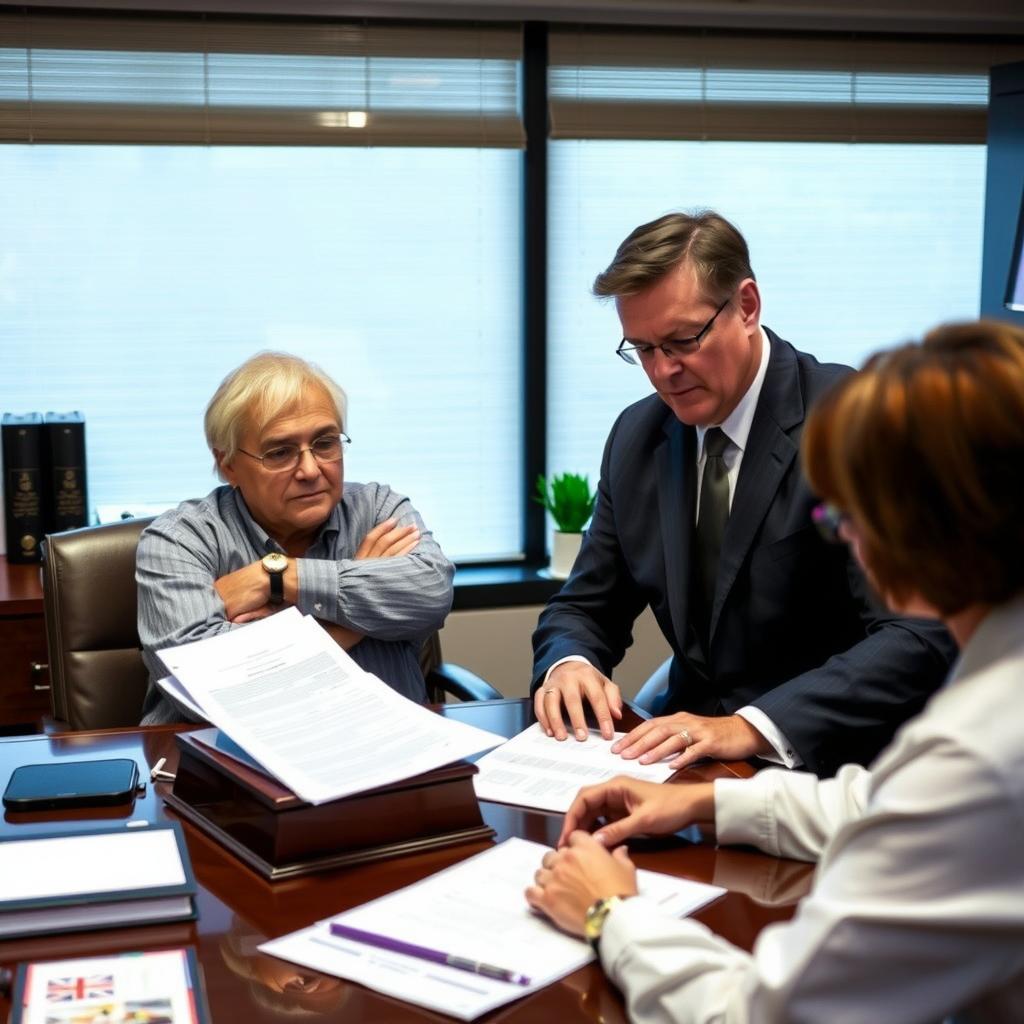
Parole Hearing Lawyer Talbot County, MD
You have served part of your sentence and the date for your parole hearing is approaching. You know the Maryland Parole Commission will review your case and decide whether you are suitable for release. Without an experienced advocate, the hearing can feel like just another formality. Mr. Sris and his Of Counsel team provide representation that brings your rehabilitation record, institutional conduct, and release plan into focus. Reach Law Offices Of SRIS, P.C. at (888) 437-7747 to request a consultation about your parole hearing in Talbot County. Law Offices Of SRIS, P.C. — Advocacy Without Borders.
Strategy for Your Parole Hearing in Talbot County
Mr. Sris and his Of Counsel approach each parole hearing by building a detailed presentation of the factors the Commission considers. They gather documentation of completed programs, work assignments, and mental health or substance‑abuse treatment you have completed while incarcerated. They identify and address any negative institutional reports and present letters of support from family, employers, or community organizations who are prepared to assist you upon release.
Talbot County is part of Maryland’s Third Judicial District, and the firm’s familiarity with local court practices and the Maryland Parole Commission’s procedures helps shape a hearing strategy that addresses the specific concerns likely to arise. Mr. Sris and his Of Counsel also work with you to develop a concrete re‑entry plan — including housing, employment, and continued treatment — because the Commission places weight on a realistic, structured post‑release environment.
What to Expect During a Parole Hearing in Maryland
A parole hearing is an administrative proceeding conducted by the Maryland Parole Commission under the Department of Public Safety and Correctional Services. The hearing typically takes place at the correctional facility where you are housed or via videoconference. You, your legal representative, a hearing officer, and possibly a victim or victim’s representative may be present. The hearing officer will review your case file, ask questions about your offense, your institutional adjustment, and your plans if released, and then make a recommendation to the full Commission.
Mr. Sris and his Of Counsel prepare you for the questions you are likely to face and, where appropriate, present a prepared statement that highlights your rehabilitation. If the Commission denies parole, counsel can advise on the timeline for reconsideration and any administrative review options that may be available under Maryland regulations. The firm’s goal is to present the strong case for your release while ensuring you understand each step of the process. For a full statutory and regulatory breakdown of Maryland’s parole framework, visit our comprehensive analysis.
The Stakes of a Parole Hearing Decision
A grant of parole means you will be released from incarceration under conditions set by the Commission, typically including supervision by a parole agent and compliance with specific terms such as maintaining employment, avoiding new criminal charges, and submitting to drug testing. Violating those conditions can result in revocation and return to custody. A denial means you continue serving your sentence until the next scheduled hearing. Because the decision directly affects how long you remain incarcerated, competent representation at the hearing is critical.
Mr. Sris and his Of Counsel have represented individuals at parole hearings across Maryland, including those whose underlying cases originated in the District Court of Maryland for Talbot County or Talbot County Circuit Court. Their experience includes cases involving violent offenses, drug offenses, and property crimes — each presenting distinct factors the Commission weighs. While every hearing outcome depends on the specific facts, they work to present your progress and release readiness in the most favorable light.
Attorneys Who Handle Parole Hearings in Talbot County
Mr. Sris, Owner and Founder of Law Offices Of SRIS, P.C., is a former prosecutor who has practiced criminal law since 1997. He is admitted in Virginia, Maryland, the District of Columbia, New Jersey, and New York. His Of Counsel team includes a former Maryland Assistant State’s Attorney — a lawyer who prosecuted criminal cases in the same state system and now brings that inside perspective to defense-side representation, including parole advocacy.
Mr. Sris and his Of Counsel bring over 120 years of combined legal experience to criminal defense matters. Results may vary. Since 1997, they have documented 4,739+ case results across all practice areas. in your case. The team’s knowledge of Maryland criminal procedure and the parole process enables them to prepare you thoroughly and to advocate effectively before the Commission.
Frequently Asked Questions About Parole Hearings in Talbot County
What is a parole hearing in Maryland?
A parole hearing is an administrative proceeding where the Maryland Parole Commission decides whether to release an incarcerated person before the end of their sentence. The Commission evaluates the nature of the offense, conduct during incarceration, participation in rehabilitation programs, and the release plan. A hearing officer conducts the hearing, often at the facility, and makes a recommendation. The full Commission then votes on whether to grant parole. Having a lawyer present can help organize evidence and present your case effectively.
How can a lawyer help at a parole hearing?
A lawyer can prepare a comprehensive release plan, gather supporting documentation, and address negative institutional records before the hearing. Mr. Sris and his Of Counsel can also prepare you for the questions the hearing officer is likely to ask and, if permitted, make a statement on your behalf. They can challenge inaccurate information in your file and present letters of support. Representation helps ensure the Commission sees a complete picture of your rehabilitation, increasing the chance of a favorable outcome.
When am I eligible for a parole hearing in Maryland?
Parole eligibility in Maryland depends on the sentence imposed and the type of offense, as governed by statutes and the Division of Correction’s policies. For many crimes, an inmate becomes eligible after serving a portion of the sentence — often one‑quarter or one‑half. Violent offenses and certain mandatory‑minimum sentences may have different eligibility rules. Because the Commission has discretion, speaking with an attorney about your specific sentence can clarify when you may be considered. Mr. Sris and his Of Counsel can review your commitment record and advise on your expected eligibility date.
What happens if I am denied parole in Maryland?
If the Commission denies parole, you continue serving your sentence and will typically receive a future hearing date. The Commission sets a reconsideration period, often one to three years, depending on your case. You may also have limited administrative appeal rights. Mr. Sris and his Of Counsel can explain the reasons for the denial, identify steps to strengthen your record before the next hearing, and, if appropriate, pursue any available review. Each denial provides an opportunity to address the Commission’s concerns.
Does the victim have a say in the parole process?
Yes, Maryland law allows crime victims to submit a written impact statement and sometimes to appear at the hearing to express their views. The Commission considers victim input when deciding whether to grant parole. Mr. Sris and his Of Counsel are sensitive to the victim’s role and can help you prepare for how victim statements may be addressed. The presence of a lawyer ensures your side of the story is fully presented, balancing the information the Commission receives.
What should I bring to a parole hearing?
While the institution holds many records, you should be prepared to discuss your rehabilitation, institutional conduct, and post‑release plans in detail. Mr. Sris and his Of Counsel compile documents such as program‑completion certificates, work‑assignment evaluations, mental‑health or substance‑abuse treatment records, and letters of support from family, employers, or community organizations. This material is organized and presented to the hearing officer to demonstrate your readiness for release.
How is the Maryland Parole Commission decision made?
The Commission bases its decision on a risk‑assessment tool, the nature of the original offense, the inmate’s institutional adjustment, participation in recommended programming, and the viability of the release plan. The hearing officer reviews the file and interviews you, then recommends approval or denial to the full Commission. The Commissioners vote, and a majority is required to grant parole. Mr. Sris and his Of Counsel understand these criteria and tailor the presentation to address each factor directly.
Can I appeal a parole denial in Maryland?
Maryland does not provide a direct judicial appeal of a parole denial, but you may seek administrative reconsideration or raise procedural concerns. If the Commission’s decision appears to rest on incorrect information or a procedural error, Mr. Sris and his Of Counsel can help you request a review. In some instances, litigation through a state habeas corpus petition or other post‑conviction mechanisms may be available. A consultation can clarify whether any avenue for challenge applies in your situation.
For guidance on your specific situation, reach Law Offices Of SRIS, P.C. at (888) 437-7747.
Request a Consultation About Your Parole Hearing
If you or a loved one has a parole hearing scheduled in a case that originated in Talbot County, Mr. Sris and his Of Counsel can help prepare the presentation before the Maryland Parole Commission. Call (888) 437-7747 or complete a contact form to schedule a consultation. The firm serves individuals throughout Talbot County — including Easton, St. Michaels, Oxford, Trappe, and Tilghman Island — from its Rockville Location at 199 E. Montgomery Avenue, Suite 100, Room 211, Rockville, MD 20850. By appointment only.
Explore related practice areas:
Montgomery County Criminal Defense Lawyer |
Prince George’s County Criminal Defense Lawyer |
Howard County Criminal Defense Lawyer |
Anne Arundel County Criminal Defense Lawyer |
Frederick County Criminal Defense Lawyer
Attorney advertising. Prior results do not guarantee a similar outcome.
Case results depend on a variety of factors unique to each case.